

Plumbers deal with everyone’s poo, literally.
And some of them have figured out how to turn their trade into an art form.
Plumbing isn’t always pretty. A lot of the time it’s actually pretty far from it. There’s digging, mud, sewer lines, crawlspaces, old pipe & plenty of things most of us would rather not deal with. Yet there is so much skill behind getting it right.
On one of our remodeling projects in Greensboro’s Sedgefield community, we recently had to reroute not 1, but 2 sewer mains around the existing house.
At first glance, the work probably looks relatively simple. Dig a trench. Lay some pipe. Get everything where it needs to go. Cover it back up.
Except it’s never really that simple.
Every. Inch. Matters.
Especially when the work you’re doing is about to completely disappear underground.
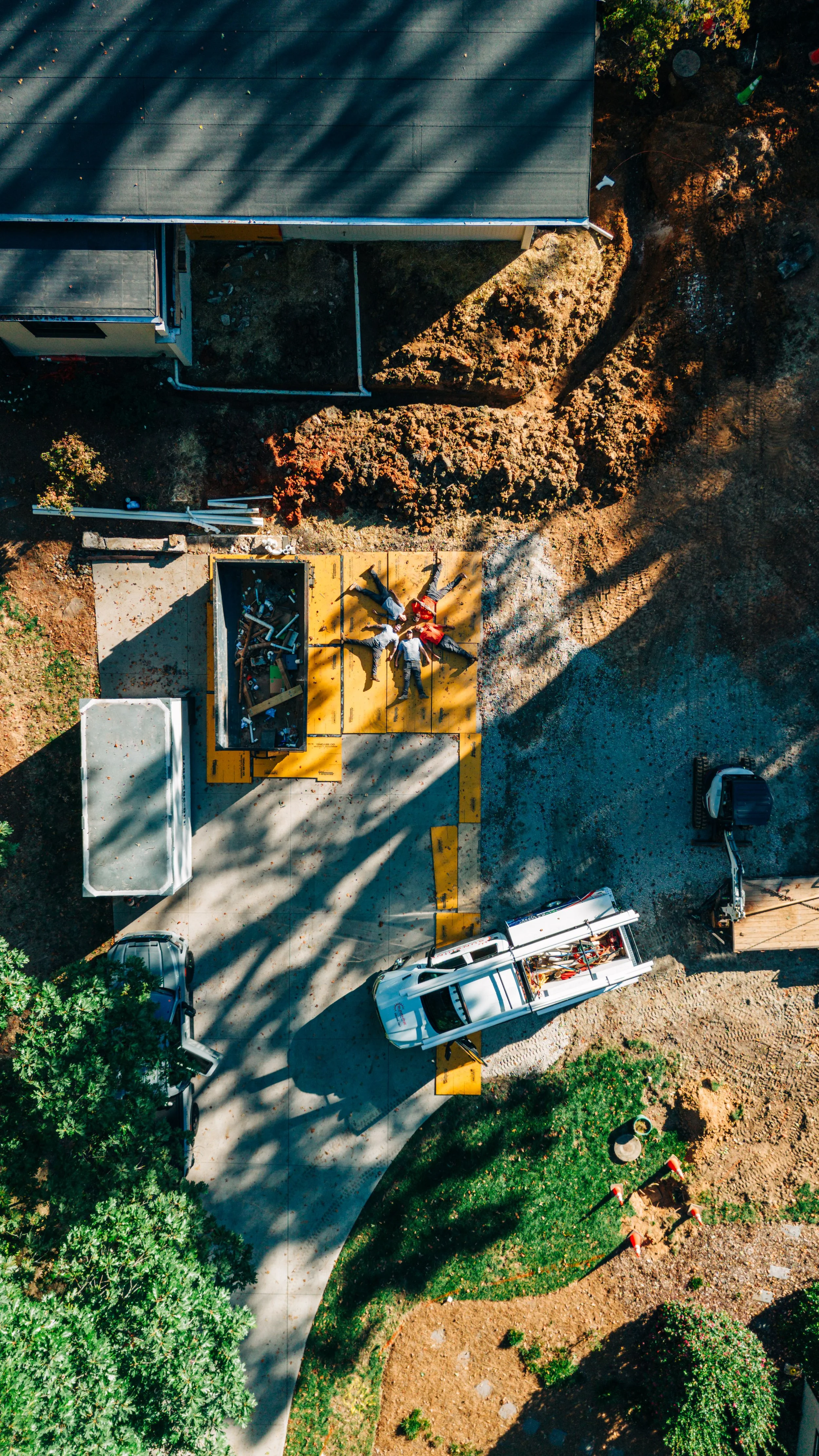
Overhead view of the plumbing crew gathered on huberwood advantech x-factor beside the house.
One of the things I appreciate about plumbing is that so much of the work happens without ever receiving much recognition.
Nobody is going to walk through this house when we’re finished & compliment the sewer mains. Nobody is going to ask what the slope was. There probably won’t be a beautiful finished photograph of the PVC running underground.
If we all do our jobs correctly, the homeowners may never really think about any of this again. And that’s kind of the point.
But the people putting it into the ground still care.
That’s what I enjoy watching.
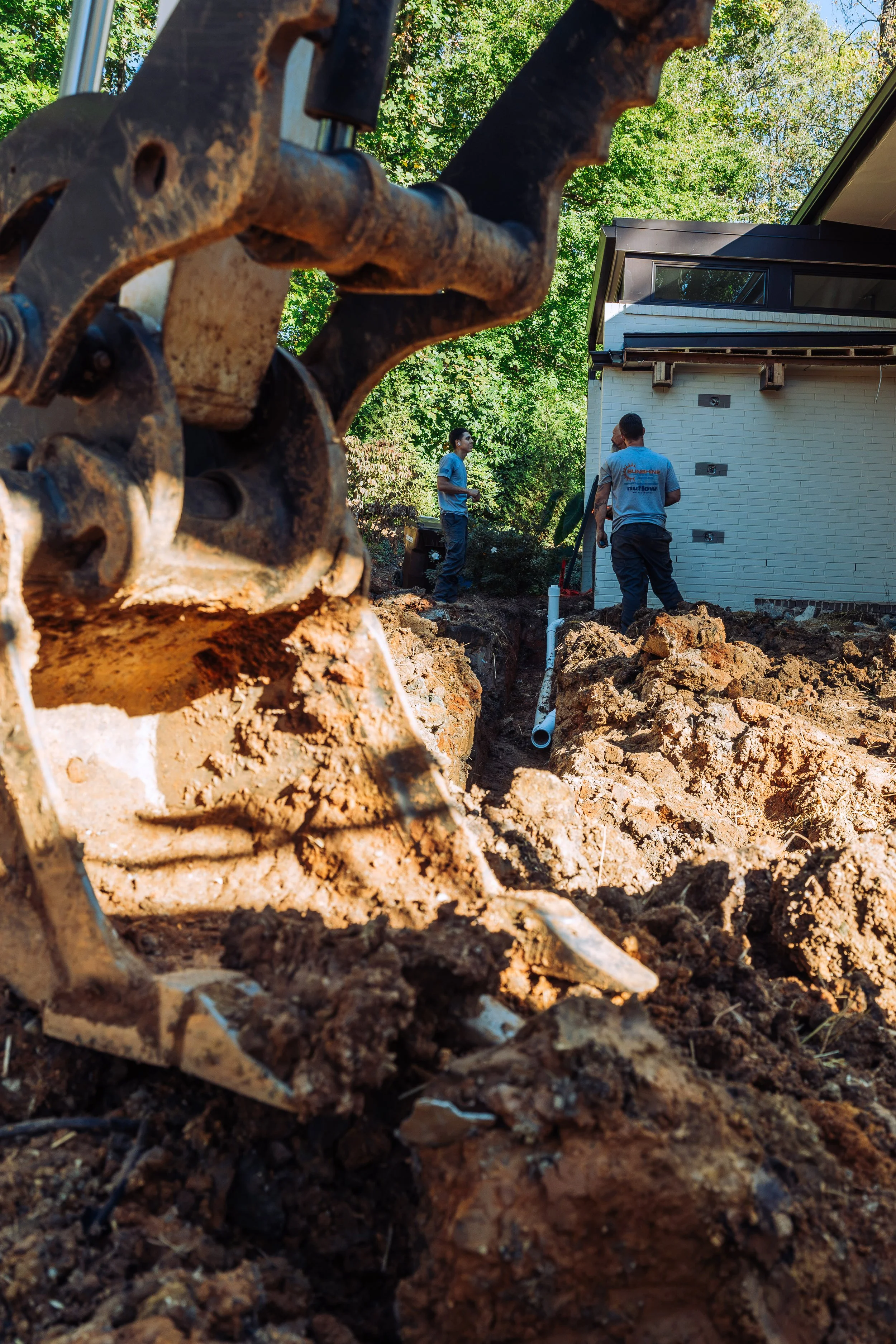
Plumbing crew beside an open sewer trench.
This particular project involved a lot of trenching around a house that has been here for decades. That means we weren’t working with a blank piece of dirt.
Power. Water. Gas. Irrigation. Telecommunications. Existing plumbing. Unmarked public utilities.
There is a whole world buried beneath our feet that we have to think about every time that excavator bucket goes into the ground.
The liability alone scares a lot of people. I get it.
There are utilities that absolutely cannot be damaged, elevations that have to work, existing conditions that sometimes don’t reveal themselves until the dirt is already coming out of the ground & other people depending on the decisions you’re making.
It takes experience. More importantly, it takes people who care.
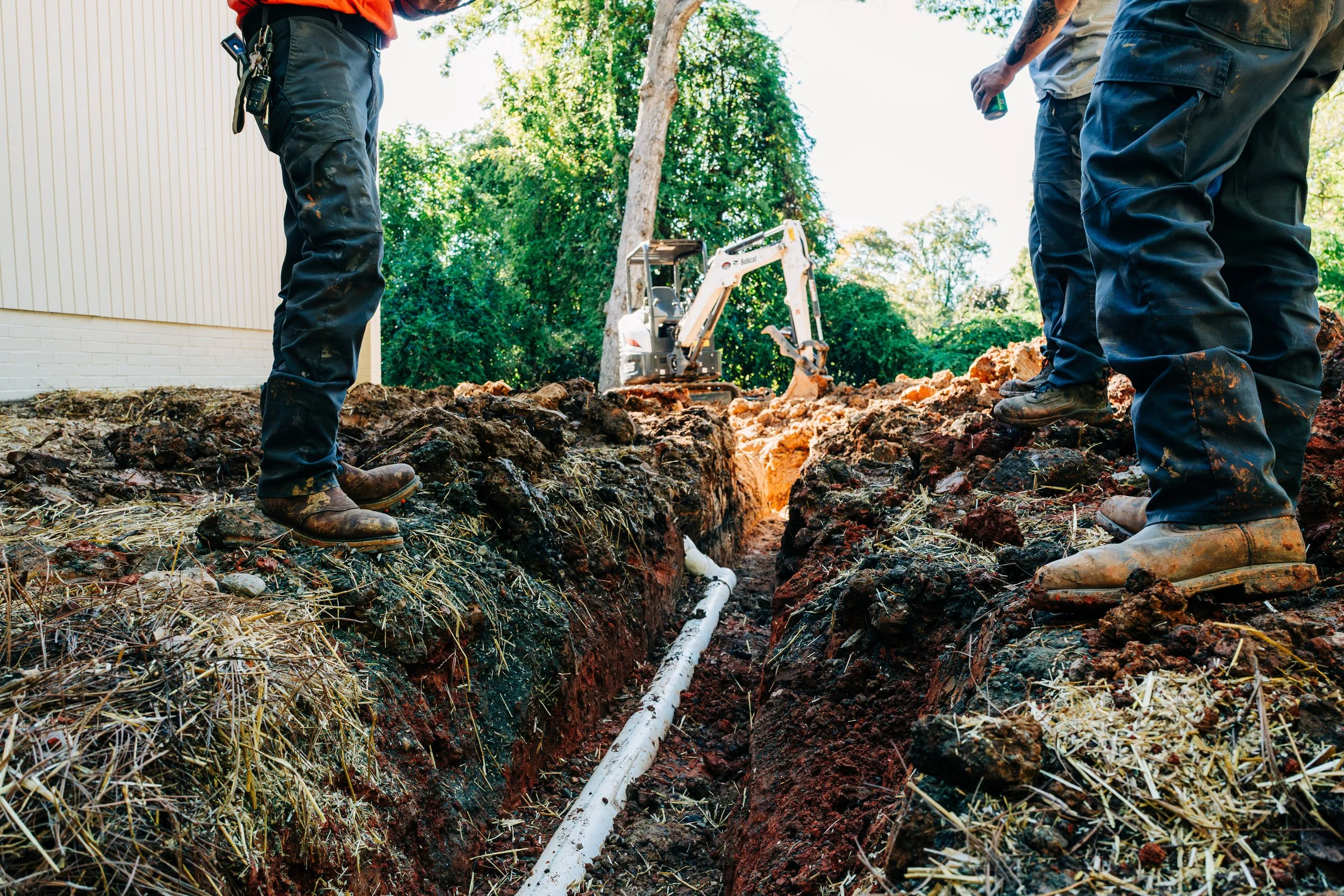
Sewer pipe in an open trench with the plumbing crew standing alongside it.
There’s a difference between knowing how to do something & understanding why you’re doing it. I appreciate people who care about both.
You can usually see that pretty quickly when you spend time around someone who really understands their trade.
Sometimes it’s stopping before covering a connection. Sometimes it’s checking an elevation again even though you already checked it. Sometimes it’s asking the excavator operator to hold up for a minute so everyone can talk through where the next section needs to go.
A lot of good construction is simply thinking a few steps ahead.
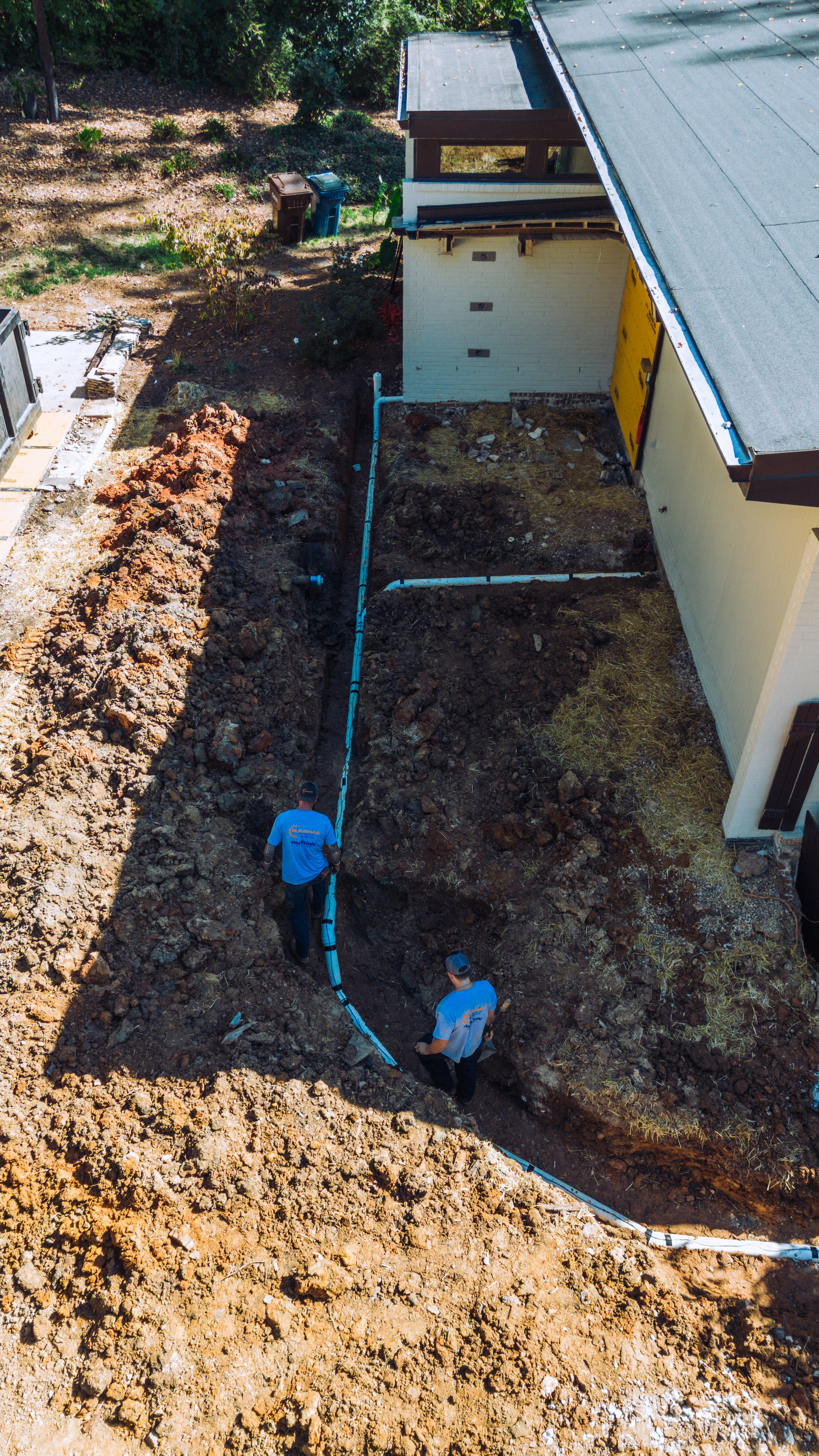
Aerial view of workers beside a sewer line routed around the existing house.
Good work starts with good communication. A few minutes before, during & after can make all the difference.
That’s something I’ve grown to appreciate more and more the longer I’ve been building. The best tradespeople I work with don’t simply show up, complete their scope & disappear.
We talk. We ask questions. We disagree sometimes. We figure things out.
And the project gets better because we’re surrounded by people who treat their work as a craft, not just a job.
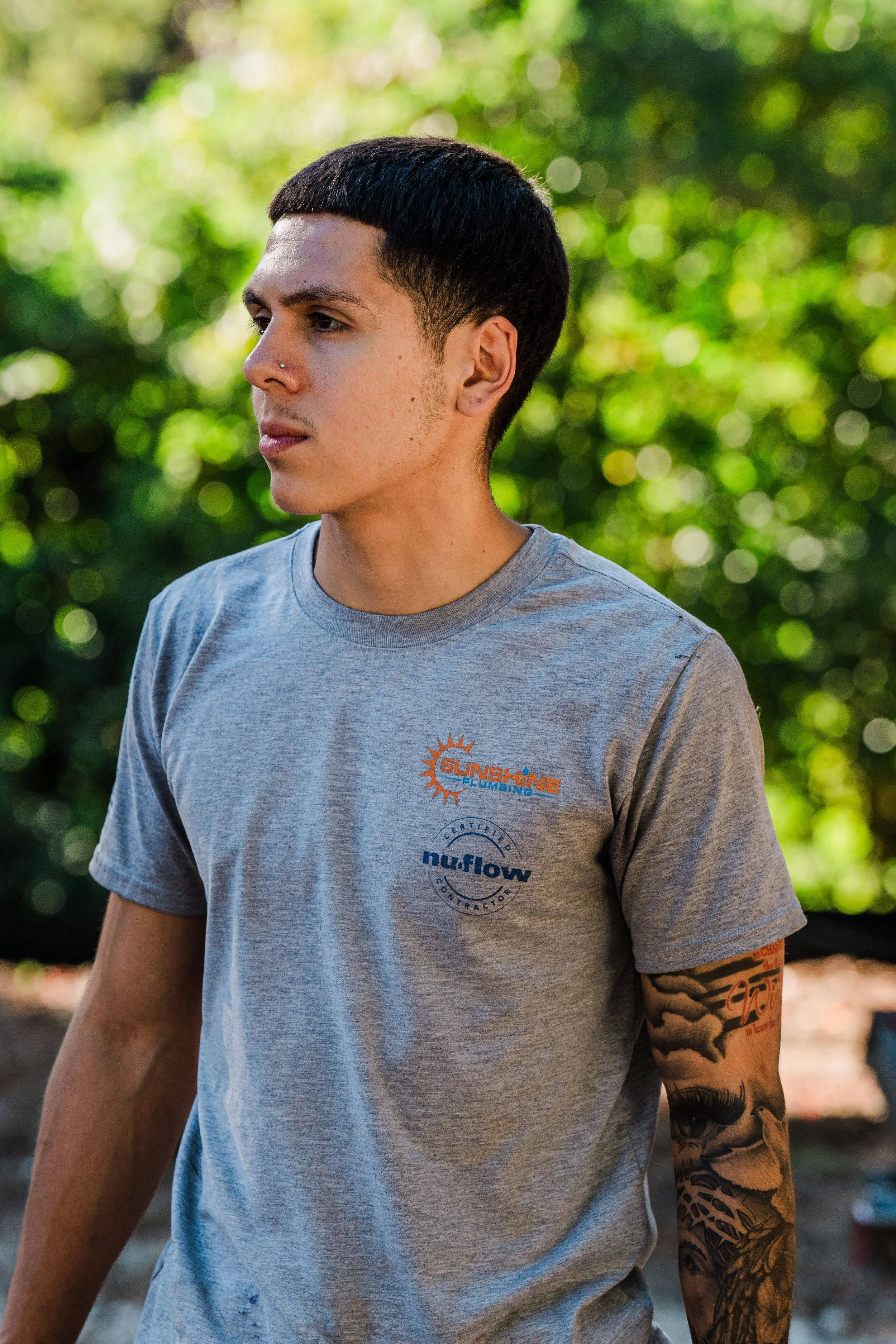
Sunshine Plumbing worker at the “Boss in Charge” project.
There was another part of watching this crew work that probably had very little to do with sewer pipe.
I have a heart for watching experience being passed down. I love seeing younger people in the trades because there is so much to learn & so much opportunity ahead.
Construction has always depended on someone being willing to show somebody else how to do something. Someone taught the person who is teaching you.
You watch. You ask questions. You try it yourself. Sometimes you screw it up. Someone with more experience shows you a better way.
Eventually you begin to understand not only how something is done, but why it’s done that way. And hopefully one day you’re the person passing that knowledge along to somebody else.
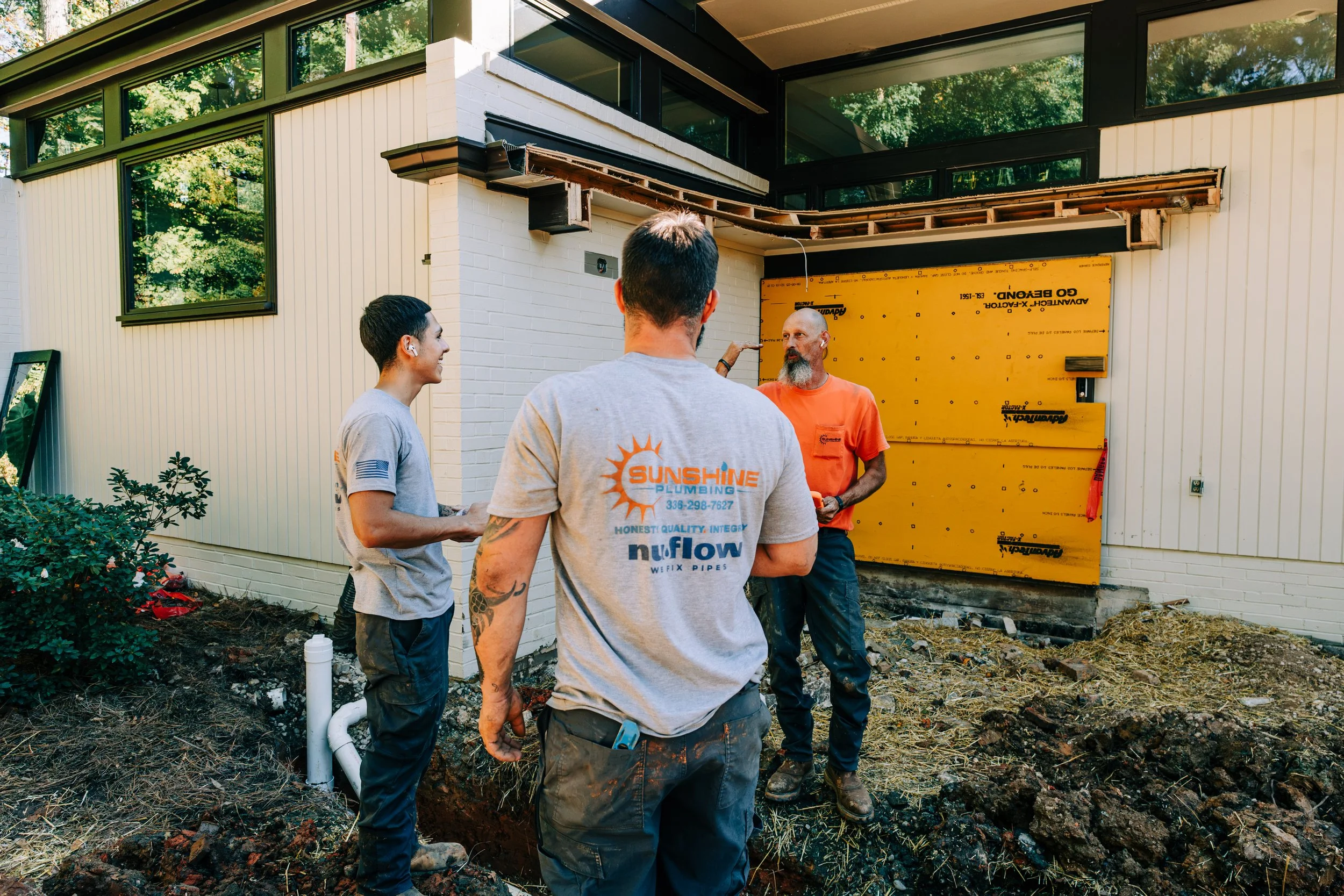
Three Sunshine Plumbing crew members talking beside the house during remodeling.
We talk a lot about needing more young people in the trades, but getting them interested is only one part of it. Once they show up, someone still has to teach them.
That requires patience. It requires experienced people who are willing to slow down long enough to explain why. And it requires an environment where asking questions is a good thing.
I think there’s an art to that too.
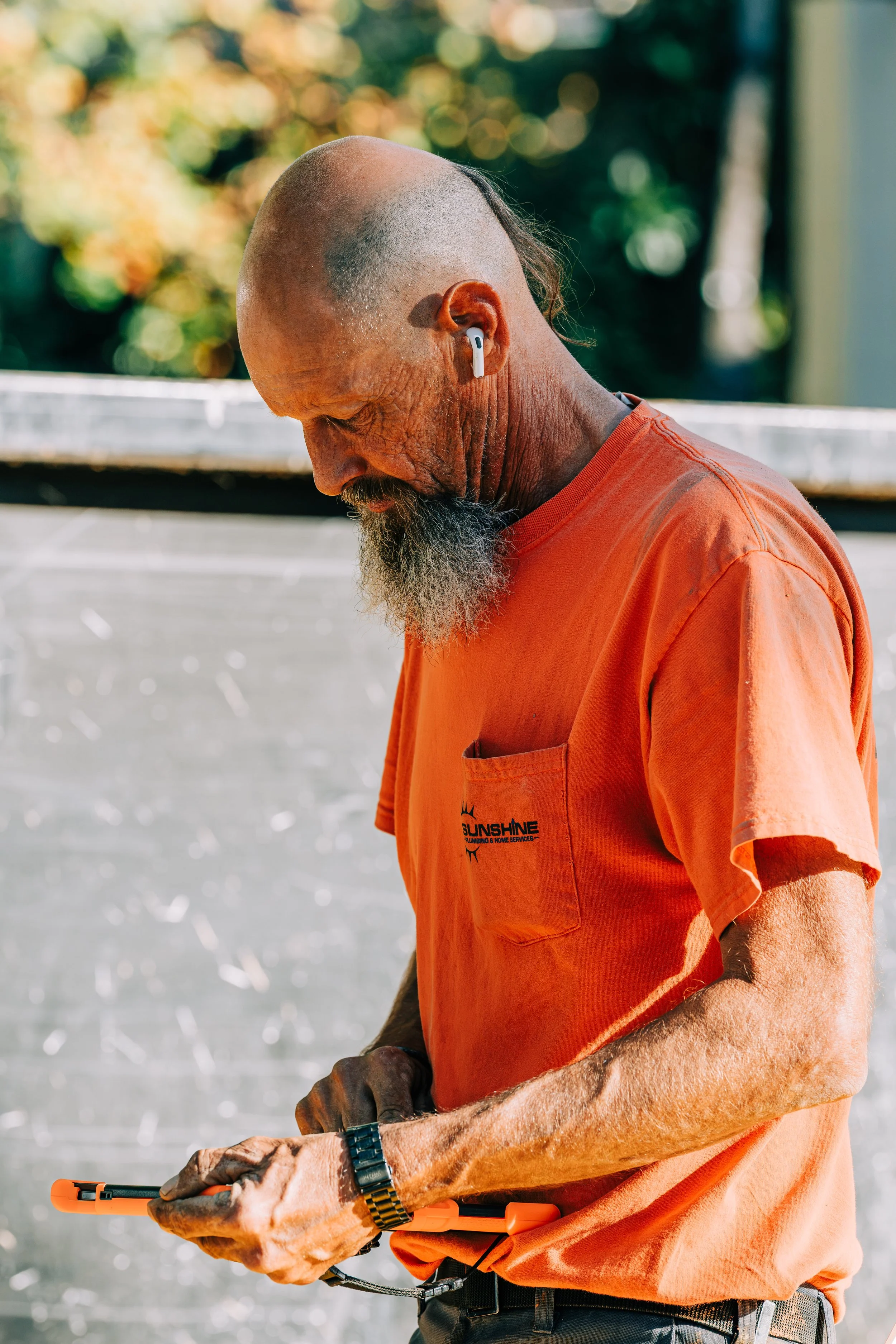
Sunshine Plumbing worker using a tablet at the jobsite.
When There Isn’t Enough Fall for a Gravity Sewer
Once the guys from Sunshine Plumbing had both sewer mains rerouted around the house, the two lines eventually made their way to the same destination: our E/One WH231 “Squat” grinder pump station.
This is essentially where gravity stops doing the work for us.
Both sewer mains have enough fall to gravity-feed into the grinder pump station. The problem is what happens after that.
Our nearest sewer manhole is almost 600 feet away, and we simply do not have enough elevation across the property to continue moving everything there by gravity.
So, sometimes gravity needs a little help.
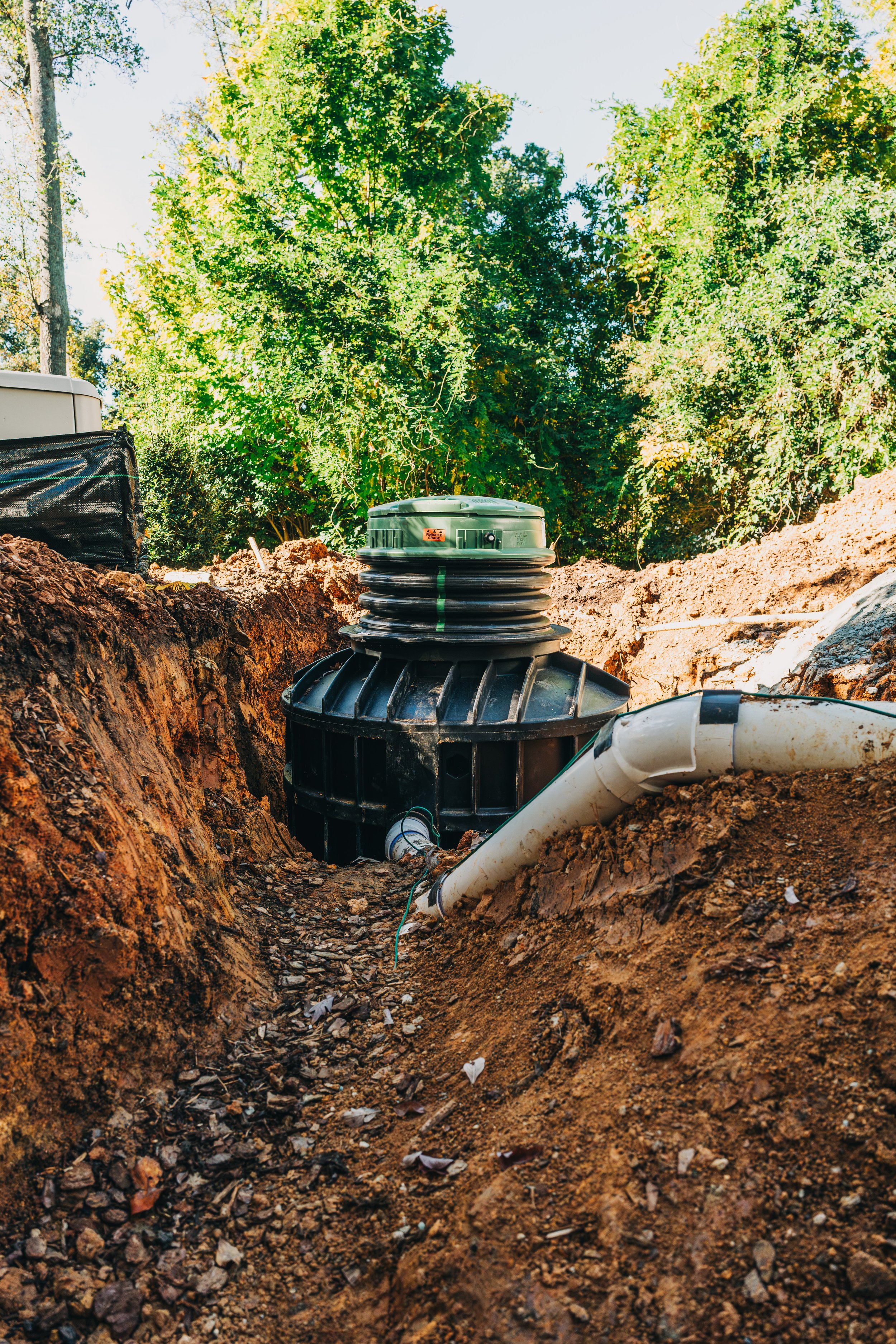
E/One grinder pump station positioned in an excavation before backfilling.
From the grinder pump station, the E/One Extreme Series grinder pump takes over. Wastewater enters the station from our two gravity sewer mains, and from there the system pumps it through one continuous pressure line nearly 600 feet to our sewer connection.
It’s a pretty fascinating solution for something that will eventually spend most of its life underground doing a job nobody really wants to think about.
The WH231 itself has roughly 237 gallons of tank capacity, and the system combines the tank, grinder pump, controls and other components into one station. We’re working with C&C Environmental Services on this portion of the system, who specialize in water & sewer work and are trained to install and service E/One systems.
This type of situation can come up on all kinds of projects. An accessory dwelling unit (ADU). A detached garage. A pool house. A shop. A shed.
Really, any structure where you’re adding plumbing but cannot achieve the fall necessary to reach the available sewer connection by gravity may require some type of pumping solution.
In our case, the grinder pump station is what allows us to bridge that nearly 600-foot distance and ultimately connect into the sanitary infrastructure serving the Sedgefield community.
Then the project changes hands again. And I think that part is worth talking about.
Sunshine Plumbing’s job was to take the plumbing from the house, reroute both sewer mains, maintain the elevations we needed & get everything successfully into the grinder pump station.
From there, our septic contractor can pick up where they left off and carry that wastewater almost 600 feet to the sanitary sewer connection.
One trade’s work becomes the starting point for the next.
That’s construction.
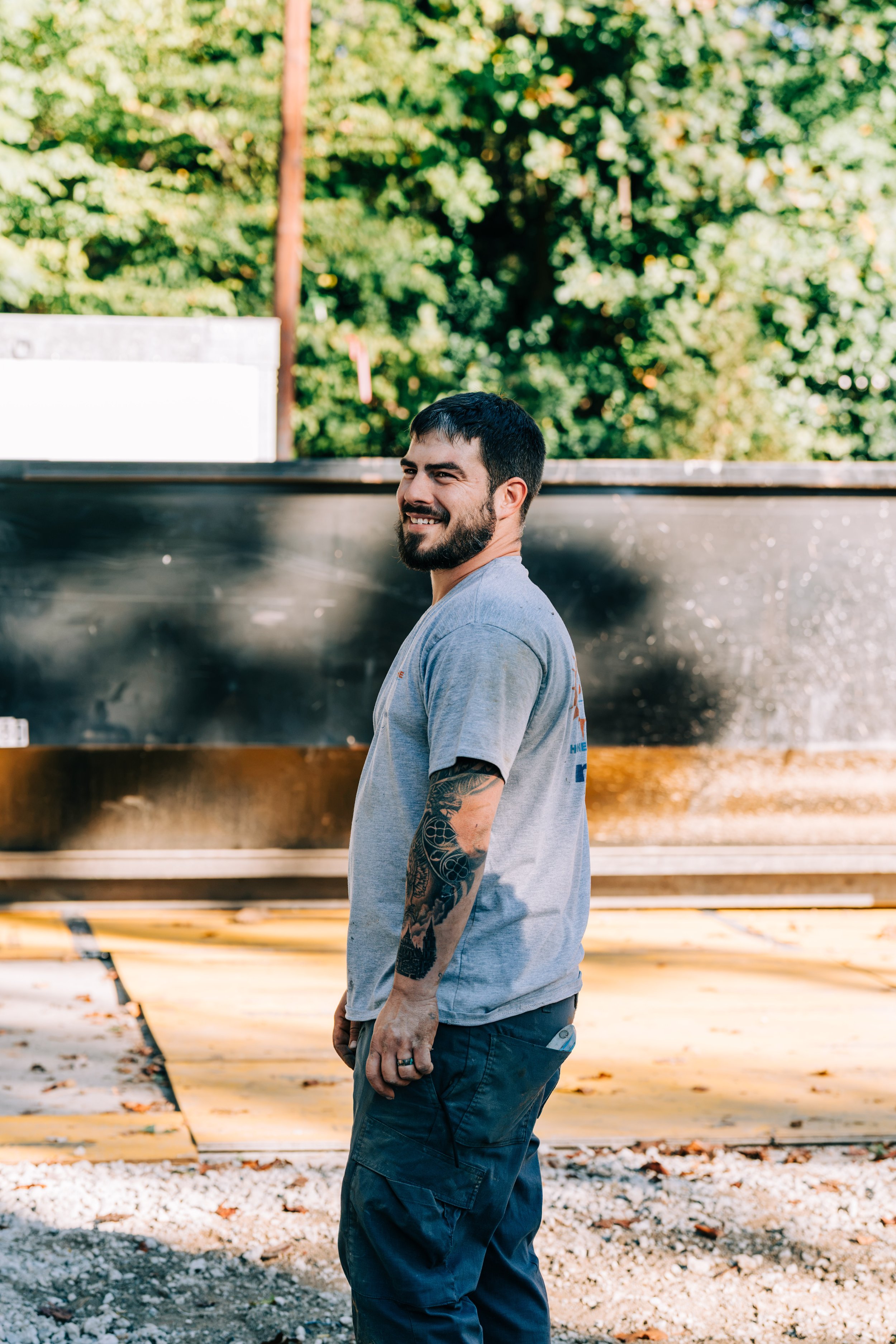
Sunshine Plumbing worker smiling at the remodeling jobsite.
I’ve never really liked reducing our relationships with tradespeople down to saying we “hired a plumber.”
Technically, sure. There’s a contract. There’s a scope of work. There are invoices.
But the best projects don’t feel transactional. They feel collaborative.
The plumber needs information from us. We need information from them. The excavator operator needs to understand where the plumber is going. Our septic contractor needs to understand what is being handed to them.
The grinder pump station has requirements of its own. Existing utilities don’t care about anybody’s schedule.
Everybody has a piece of the puzzle.
And when the mentality changes from “that’s their problem” to “how do we solve this together?”, the project gets better.
Good people make difficult work a little easier. There’s usually room for a little laughter too, even on the dirtiest of days.
That might be what I like most about these photographs.
There are excavators, trenches, sewer pipe & a grinder pump station. But mostly there are people. People thinking, communicating, teaching, learning & laughing. People doing work that most homeowners will eventually never know happened.
Behind every good project are good people who care about the minor details.
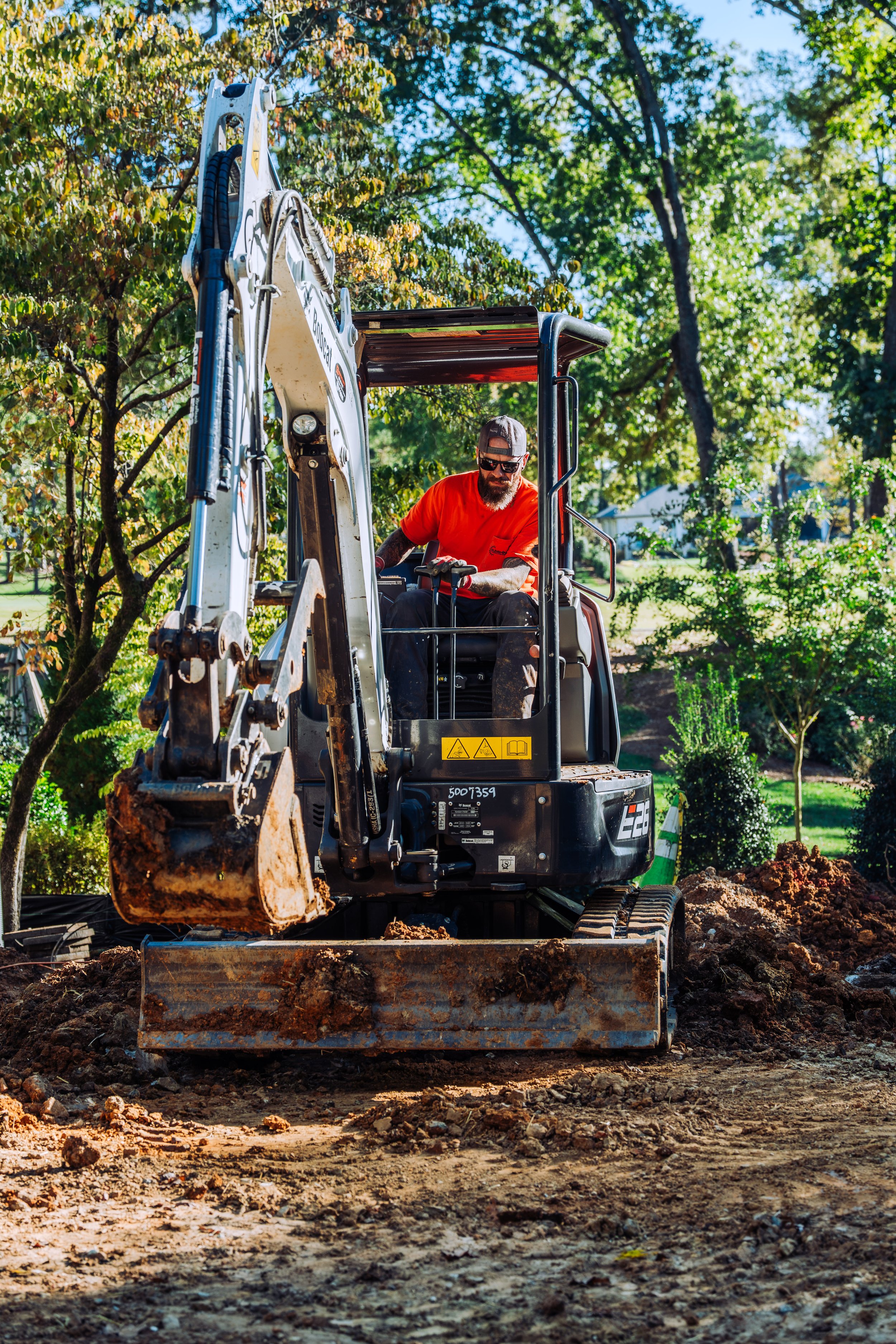
Excavator operator working beside the house at the Sedgefield remodeling project.
To the guys at Sunshine Plumbing, thank you.
For doing the hard work. For caring about our details. For communicating with us instead of simply showing up to complete a scope. For sharing your experience, being willing to teach & treating your trade like an art form.
Eventually all of this gets covered back up. The dirt goes back into the trenches. The equipment leaves. The grass grows back.
The two sewer mains disappear. The grinder pump station quietly starts doing its job. Everyone moves on to the next thing.
The work disappears underground.
The craftsmanship doesn’t.
Remember to be kind & consult your local builder.
– Samuel Cruz
Founder & Builder at Cruz Built