
Seeing Where Glass Begins | Weather Shield Windows & Doors Tour 2026

Seeing Where Glass Begins
On our way to Medford, Wisconsin, to tour where Weather Shield Windows & Doors is headquartered, we had the opportunity to make a pretty incredible stop along the way: Cardinal Glass’s FG plant in Menomonie, Wisconsin.
It turned out to be a giant furnace melting roughly 8,000 pounds of raw materials at a time.
As a custom home builder and remodeling contractor in Greensboro, North Carolina, we spend a lot of time talking about windows and doors.
Glass packages. Coatings. U-factors. Solar heat gain coefficients. Glazing beads. Stiles and rails. Energy efficiency. The list continues...
We care about all of those individual components because they play a role in the overall performance of a window assembly and, ultimately, the home.
Paying more, not less, attention to those details during design and preconstruction gives us another tool to help manage comfort, durability, energy consumption and cost over the life of a home.
But before any of those specifications exist, somebody has to actually make the glass.

Seeing Float Glass Manufacturing Up Close
The furnace at Cardinal was, without question, one of the most impressive things I have ever seen in my life.
The moment we stepped into the part of the plant where the furnace lives, you could feel it.
The ambient temperature was somewhere around 130°F, which explains why seemingly every window and door in the building was wide open.
You can really feel the heat, but surprisingly, you don't see much of what's creating it. Mostly just small flashes of yellow, orange and red.
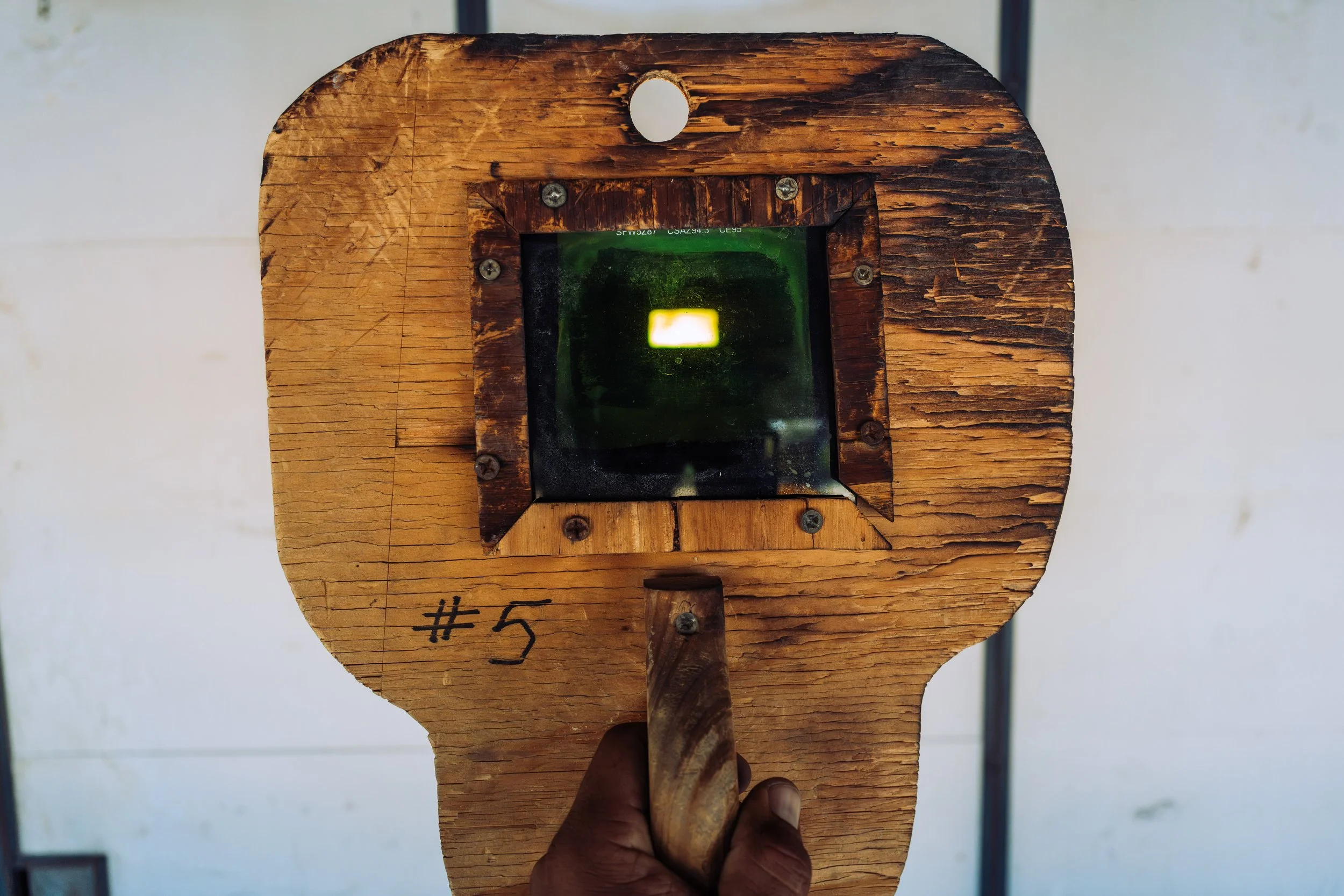
Furnace inspection window at the Cardinal Glass float glass plant in Menomonie, Wisconsin.
Each batch starts with roughly 8,000 pounds of raw material, which is fed into this enormous furnace and melted as part of the process of creating float glass.
Float glass is essentially the starting point for much of the architectural glass we interact with every day. The process creates an incredibly flat, consistent sheet of glass that can then undergo additional processing to eventually become part of an insulated glass unit, or IGU, like the ones used in residential windows and doors.
One of the guys giving us the tour casually mentioned that the furnace consumes roughly the same amount of energy as the entire town.
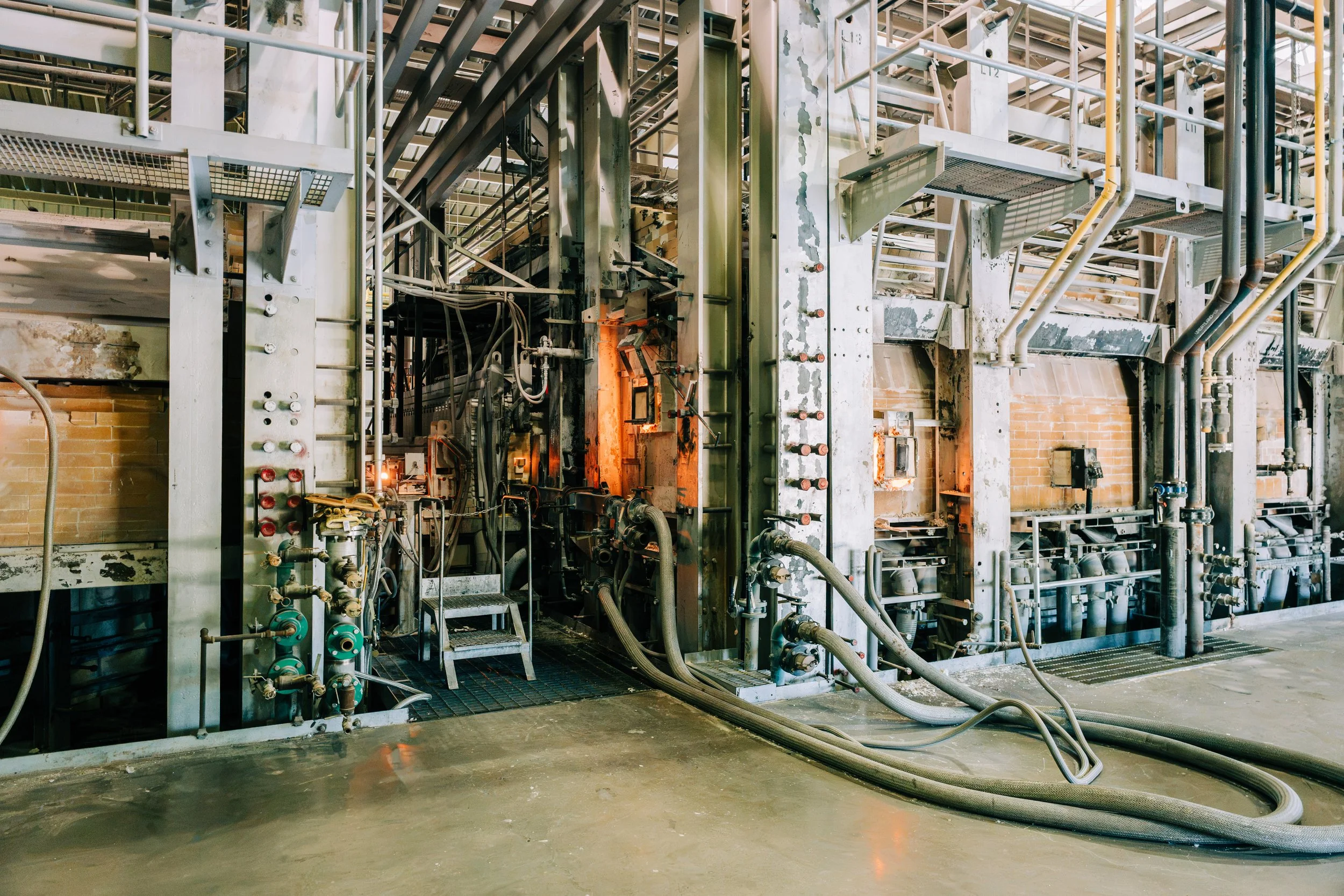
Float glass furnace at the Cardinal Glass FG manufacturing plant in Menomonie, Wisconsin.
I cannot imagine what that natural gas bill looks like each month. 😅
When somebody puts the energy consumption in those terms, the scale of what you're standing next to starts to register a little differently.
It also gives you an entirely different appreciation for the finished product.
By the time we see an aluminum-clad window on one of our projects, it's clean, precise, coated, insulated, assembled and ready to install.
Standing inside these manufacturing facilities makes it hard to ignore just how many people, processes and individual steps it takes to make a single window assembly.
Why This Matters to Us as Custom Home Builders & Remodelers
By the time a window arrives on one of our job sites in Greensboro or the surrounding Triad area, we're ready to install it.
But a lot of the decisions that determine how that window performs were made months, and sometimes more than a year, before it ever gets there.
That's why we spend so much time on windows during preconstruction.
Better Specifications Start During Preconstruction
As a fixed-price custom home builder, budget certainty is incredibly important to our clients.
One of the ways we work toward that certainty is by doing as much homework upfront as possible during our preconstruction phase.
That means understanding not only what a product costs, but what we're actually specifying and why.
Windows and doors can represent a significant portion of the budget on a custom home or major renovation. The manufacturer, frame material, glass package, coatings, performance ratings, operation, installation details and even the orientation of the home can all influence the final specification and overall cost of a project.
There isn't one window package that's right for every house.
Working through those details upfront allows us to tailor the products to the home, the client's needs and wants, the architecture, the budget and the performance goals of the project.
It also helps us get closer to what we're ultimately trying to accomplish during preconstruction: a thoughtful scope of work and a fixed-cost construction agreement with fewer unknowns once construction begins.
Our job at Cruz Built isn't to know everything.
It's to keep learning.
We spend time every week learning new building methods, materials and tools so we can better understand the decisions we're asking our clients to make.
Getting the opportunity to stand inside the plant where the glass itself begins gave us another small piece of that understanding.
...and it was pretty damn cool, if I do say so myself.
Next Stop: Weather Shield Windows & Doors
Next stop: Medford, Wisconsin, where we'll get to see how Weather Shield Windows & Doors takes insulated glass units and turns them into the finished windows and doors that eventually make their way onto custom homes and remodeling projects like ours back in North Carolina.
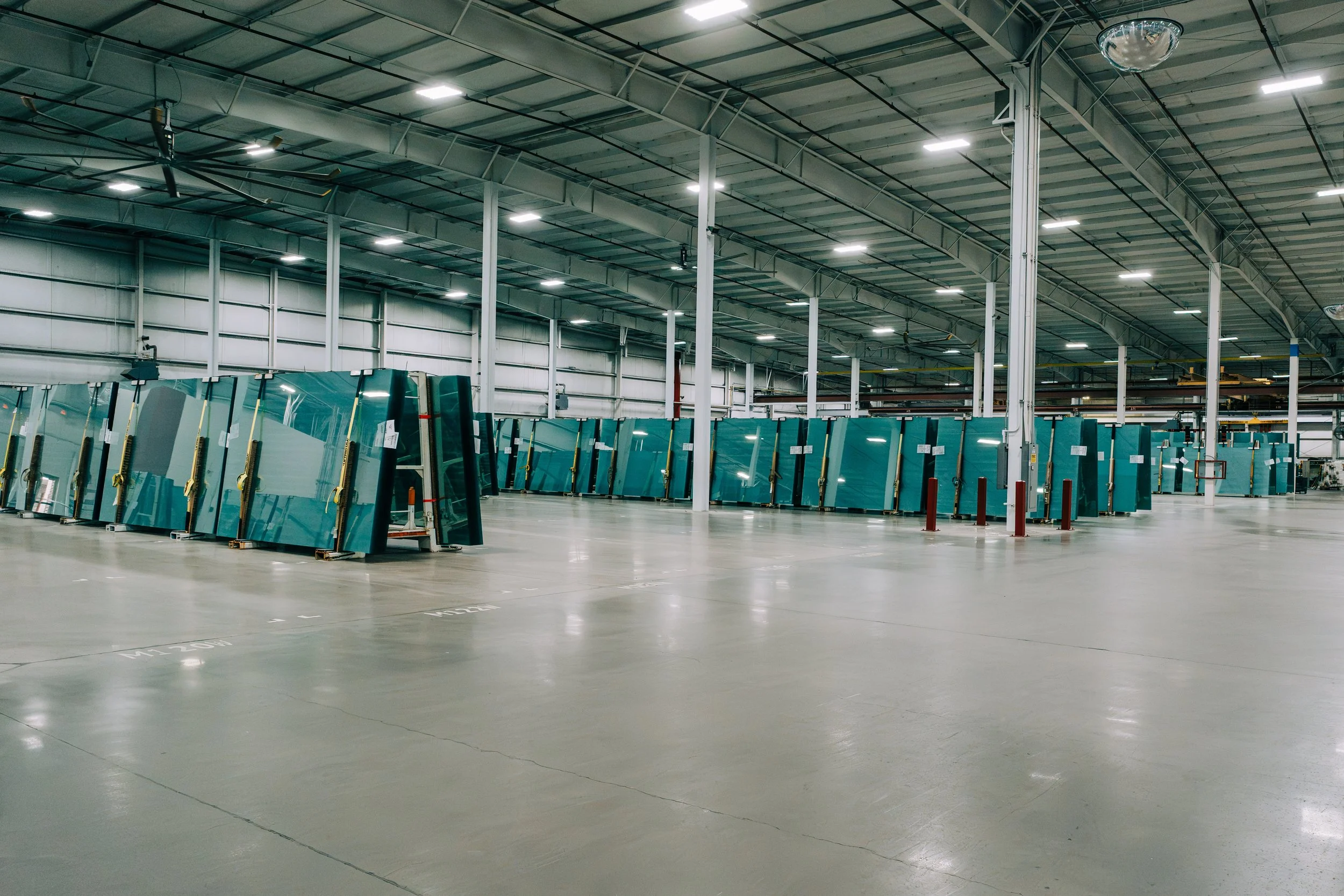
Large inventory of float glass inside the warehouse about to ship.
There's something pretty wild about following that process backward.
From an 8,000-pound batch of raw materials melting inside a furnace in Wisconsin...
to a finished window being carefully flashed into one of our projects right here in Greensboro, North Carolina.
As always, consult your local builder & remember to be kind.
- Samuel Cruz